• About
  • Blog
  • Books
  • Contact
  • Latest Release
  • Reviews & News
  • Welcome

Lilly Gayle Romance

~ Romance Author and Books

Lilly Gayle Romance

Author Archives: lillygayle

Happy Valentine’s Weekend

12 Friday Feb 2016

Posted by lillygayle in Uncategorized

≈ 2 Comments

Tags

Valentine's Day

Love is in the air! It’s Valentine’s Day Weekend! It’s also hubby’s birthday weekend. I cannot believe the love of my life will be 60 years old tomorrow. Sixty? Did I just say sixty?  OMG! When did he get so old? When did I get so old?

So, why is that men age so much more gracefully than women?

IMG_5093My husband is sexy with his gray hair…kind of like Richard Gere. Me? not so much. That’s why I color mine. This age thing is just a number, but it sure is creeping up into the higher digits fast!


Life is short people! Today, you may be 27 and planning your wedding to the man you’ve loved since you were 14–like my youngest daughter. 029

058Or you may be on the cusp of thirty as is my oldest daughter. But no matter your age, time is ticking by faster than you can ever imagine. In the blink of an eye, you’ll be staring back at your life, wondering when it passed you by. So stop procrastinating and start doing. Live today and be happy.

Sunday is Valentine’s Day. Be sure to tell ALL the people you love how much you care. Then on Sunday night, sit down, cuddle up and….watch the Walking Dead. Then you’ll really appreciate your life. lol!


Write Right: Ten Common Mistakes

22 Friday Jan 2016

Posted by lillygayle in Uncategorized

≈ 5 Comments

Tags

Grammar, Punctuation, romance novels, Wiritng Mistakes

While I struggle to find the time and inspiration to complete two manuscripts and start a third, I’ve done some editing along the way. Although I only have six books in print, I’ve been writing for almost twenty years. Granted, I spent the first thirteen of those years learning what not to do. I thought because I was fairly intelligent and had done well in all my English and writing classes in college that I could just read a few romance novels and sit down and write.

Wrong!

Writing isn’t just about having a good story. It’s about writing that story in such a way the reader feels a connection to the characters. So today, on this cold and snowy January day, I thought I’d share my TOP TEN WRITING MISTAKES:

REPEATS:

Almost every writer unconsciously leans on a “crutch” word. If you’re reading a romance, those words frequently come out during the love scenes. Watch out for how many times you use certain phrases. If you find yourself describing the same action or emotion with the same word in every chapter, the reader is going to notice. If your heroine’s pulse quickens ever time she sees the hero, the reader might think she has a fatal heart condition. Also, watch for using the same word multiple times in the same paragraph.

For example: He raked her with hot, hungry eyes—wanting her, and
knowing he could never have her.
“You thought what?” His voice was harsh, but he had to
make her understand. “That I could stay in Redemption and be your
friend?”
“Yes.” Her voice was little more than a groan.
With a groan of frustration, he bent forward and took her
face in his hands. He leaned closer. Their foreheads touched. His hands ached to pull her closer. Unable to resist, he leaned forward—his lips just a whisper away. “Think again.”
Then he lowered his head and molded his mouth to hers.
hhprintcover3Notice how many times the words, leaned, hands, and groan are used. This is from a rough draft of an earlier version of my western historical, Helpless Hearts.  And here’s the version that made it into print:

He raked her with hot, hungry eyes—wanting her, and
knowing he could never have her.
“You thought what?” His voice was harsh, but he had to
make her understand. “That I could stay in Redemption and be your friend?”
“Yes.” Her voice was little more than a whisper.
With a groan of frustration, he bent forward and took her
face in his hands—his lips just a whisper away. “Think again.”
Then he lowered his head and molded his mouth to hers.

Also check your manuscript for unnecessary words such as “just” and “that.” If the word can be removed from the sentence without changing its meaning or making the reader stumble or struggle to understand, remove it. That is one of the most overused and often, unnecessary words in the English language.

FLAT WRITING:

Amber met Gerard’s gaze, and she was afraid. Was he really a vampire?
“I’d give anything to drink beer again,” he said in a reverent voice.
Amber breathed a sigh of relief. Gerard Delaroche wasn’t a vampire, and he didn’t want to drink her blood. He wanted a beer. Like a normal guy.

a316b-embracethedarkness_w7757_750Boring! And flat. In this first draft of a scene from Embrace the Darkness, I’m telling the reader Amber is afraid. Gerard speaks, and then Amber chastises herself for believing he’s a vampire. Besides telling rather than showing Amber’s fear, it lacks emotion, and the reader will soon lose interests. This kind of flat writing tells the reader you don’t care about the story or the characters. Or, you’ve lost your way and don’t really know what to write. Whenever you see flat writing on the page, take a break. STOP writing. Rest, think, and find your muse. Then scrap the boring writing and fix it. Add emotion. Make it personal.

Gerard inhaled sharply. His eyes devoured her.
Despite renewed fear, she managed to set the bottle
back on the counter without dropping it.
He’s not a vampire. He’s not a vampire. He’s not a
vampire.
“I’d give anything to drink beer again,” he said in a
reverent voice.
Amber nearly laughed out loud. Her shoulders
sagged. Gerard Delaroche wasn’t a vampire, and he
didn’t want to drink her blood. He wanted a beer. Like
a normal guy.

EMPTY ADVERBS

“Ly” words such as actually, suddenly, completely, really, unfortunately, and hopefully, are a lazy way to write. It’s telling instead of showing. And it drags a sentence down. Use fewer, stronger words to tell more.

In stead of:  Abigail Halsey sat on a bench in the convent
garden. She was so sad and lonely. She really wanted to forgive the man who had done this to her but unfortunately, she couldn’t find it in her heart to do so.

Rewrite: Abigail Halsey sat on a bench in the convent garden, head bowed, trying to find forgiveness in a
heart grown cold.

– from Slightly Noble


PHONY DIALOGUE
Don’t have characters talk about things they already know just to advance the plot. Example from an original draft of Slightly Tarnished:

His mother glared. “How dare you! If you had ever once acted like an earl, things might have turned out differently, but you challenged your brother to a race in the polluted waters of the Thames. You recovered. He didn’t.”

The Earl already knows what happened to his brother, and he most likely feels guilty about it. In this example, his mother is only speaking so the reader will know the brother was somehow killed or injured and the mother blames the son, but it lacks emotion, and the dialogue doesn’t seem natural. So, I had to find another way to divulge the information. The Earl, Chad, is the POV character, so I gave the reader the information he or she would need by filtering the conversation through his thoughts and emotions.

“How dare you! If you had ever once acted like an earl, things might have turned out differently.”
Pain sliced through Chad like a blade, sharper than his mother’s tongue. “We were eleven years old.” He softened his words, his heart heavy with a guilt that would never fade.
Twenty-one years had passed since he challenged his twin brother to a race in the polluted waters of the Thames. Twenty-one years since they both contracted enteric fever. And twenty-one years of Chad shouldering the responsibility for the tragic outcome of his reckless actions.

Also, when writing contemporary novels and romances, avoid trendy slang unless your characters are teens. It dates your book and can make your hero or heroine seem fake. And make your dialogue true to your character. A waitress will not drop to her knees to perform CPR while shouting, “Joe, dial 911. I think Burt is suffering from a myocardial infarction.” Unless she’s a cardiac surgeon in the witness protection program posing as a waitress, she’d more likely shout, “Joe, call 911! Burt’s having a heart attack.”

Dialogue shows the reader something about the character that a physical description can’t. It shows their personality.

THE UN-NEEDED SUFFIXES

Don’t use “ness” words needlessly. Words like mindlessness, precociousness, wittiness. They’re real words but why use them when there are much stronger alternatives?
Adding “ly” to “ing” words is another bad shortcut. Sometimes, it is telling, not showing.
From Wholesale Husband:

Instead of saying:
“This is a serious proposal,” she said nervously.
“Who are you codding?”His eagerness to leave the confines of the coach were exceedingly difficult to hide. Then she touched his arm again, and his body reacted to the contact in a most unwanted way. Narrowing his eyes, he pried her hand from his wrist.
I edited it to:

“This is a serious proposal,” she insisted, gnawing her lip.
“Who are you codding?” He leaned forward, stretching his leg, ready to descend from the suffocating confinement of the hansom cab.
Again, she stayed him with a touch and again his body reacted to the contact in a most unwanted way. He narrowed his eyes and pried her hand from his wrist.

THE DREADED ‘TO BE’ WORDS:

To be words are passive and slow pacing. Avoid them.
Once your eye is attuned to the frequent use of the “to be” words – “am,” “is,” “are,” “was,” “were,” “be,” “being,” “been” and others – you’ll be appalled at how quickly they deflate your writing, slowing the pace to a crawl.
Instead of- Standing behind a tanker car near the loading platform at Petroleum Center, Ellie was watching the passengers board the Oil Creek Railroad when she said, “Did the porter get our trunks loaded?”

I edited to: “Did the porter get our trunks loaded?” Ellie Wilder
stood behind a tanker car near the loading platform at Petroleum Center, watching passengers board the Oil Creek Railroad.  – From my WIP, Wilder Hearts.

Also, try not to use “there was” or “there is.” It slows pacing.

LISTS

“She looked at the big mahogany desk with its dark polish. It was cluttered with papers, pens, a letter opener, and yada,yada, yada.

Who cares? Unless she’s going to use a letter opener from that desk to kill the villain, we don’t need to know about it.

SHOW. DON’T TELL

This, is the most important thing to do when writing. Don’t tell us your heroine was afraid. Describe her facial features. Filter her emotions through her thoughts, words, and physical reactions. Don’t just say she was scared. The moment the reader can visualize the word picture you’re trying to paint, then you’re showing instead of telling.

Example from Out of the Darkness:

Gooseflesh pimpled Megan’s skin. She
shivered, feeling those footsteps on her grave
again, and followed Vincent into the living room.
He wasn’t a vampire. She hadn’t seen his
reflection in the mirror because of the angle at
which he was standing—or the dim lighting—or
whatever. But he was not a vampire, despite her
erotic dream of the night before.
She shook herself, pushing aside the
unwanted memories and her irrational fears.
“Can I get you something to drink?”

AWKWARD PHRASING

When you’ve completed a chapter, a manuscript, or even a paragraph, reread it as if you are reading a published book. If you stumble reading it or think something else while you’re saying the words aloud, then the phrasing is probably wrong. Awkward phrasing makes the reader stop in the middle of the story to ponder the meaning of what you’re trying to say.

COMMAS AND OTHER PUNCTUATION.

Know your grammar and punctuation! Refresh yourself on the rules. Get a style book. hcrwOr check out other books and/or websites on grammar and writing. In today’s digital age, a writer’s resources are virtually unlimited. So learn the rules. Know which ones you can break and which ones you can’t break. If you don’t already know, teach yourself about compound sentences. Most modifying clauses and many phrases *require* commas. A sentence whose parts cannot stand alone as a complete sentence on either side of an AND or BUT does NOT need a comma. And for God’s sake, KNOW the differences between your and you’re, then and than, too, to, and two, just to name a few.
But most of all. Just write!
Merry Christmas to Me!

23 Wednesday Dec 2015

Posted by lillygayle in Uncategorized

≈ 2 Comments

I have so much to celebrate this year. My oldest daughter, son-in-law, and 18-month-old granddaughter have finally moved back to the states from Germany. They still live a good 10 hours away, but I will get to see them over the holidays, so yippee!

SlightlyNoble_w9291_100Slightly Noble, my latest historical romance published in February of this year won first place in the OKRW International Digital Awards contest in the historical category. http://okrwa.com/contests/international-digital-awards/winners/

And just today, I got an email from Fresh Fiction with yet another glowing review of Slightly Noble. Clare O’Beara of Fresh Fiction says: ” Once I started reading SLIGHTLY NOBLE I was hooked, and I suggest anyone looking for an out of the ordinary romance could do no better.” I couldn’t have gotten a better compliment.

You can read the review in it’s entirety at http://freshfiction.com/review.php?id=57955

To date, I think Slightly Noble is my best selling book. Now, if I could only get off my keister…or, on my keister and finish another book, maybe I can have another good year next year.

b2a69-163733_489976232317_259698_nSo, thank you to my fans, family and friends for a good writing year. May those of you who celebrate, have a joyous and wonderful Christmas, and may you all have a Happy New Year!


My Review of Donna Steele’s Christmas with Family

13 Friday Nov 2015

Posted by lillygayle in Uncategorized

≈ 1 Comment

christmas with familychristmas with family by Donna Steele
My rating: 5 of 5 stars

When Symone’s brother-in-law is critically injured and her sister has to fly to Germany just before Christmas to be at his side, Symone volunteers to look after her 4 year old niece, Rachel. Symone’s Christmas with family isn’t what she expected, especially when her brother-in-law’s hunky friend, a former soldier named Blake, shows up to help. Rachel is tired of spending time with Mr. Wrong, but is Blake Mr. Right? Blake wants what his friend has–a family–but his ex wasn’t the woman she pretended to be, and Symone is too tempting for him to trust his instincts. Is it possible she’s the real deal? This short story is packed with well developed characters with goals and motivations that make perfect sense. It was like reading the script of a Hallmark Channel movie. If you’re short on time but want to read a Christmas story this holiday season that will leave you feeling warm and fuzzy all over, check out Ms. Steele’s novella, Christmas with Family.

View all my reviews

The New Screening Mammogram Guidelines: What you should Know

07 Saturday Nov 2015

Posted by lillygayle in Uncategorized

≈ Leave a comment

Tags

breast cancer, screening mammography guidelines

For a couple of years now, The U.S. Preventive Services Task Force (a group of experts that makes recommendations to the U.S. Department of Health and Human Services) has been trying to change accepted medical guidelines on screening mammography for women. It should be noted that prior guidelines recommended screening for breast cancer start at age 40 and continue for as long as the woman is in good health. The new government recommendations now state that screening not start until age 50, be performed every other year rather than every year, and cease when a woman reaches age 75. There are guidelines for woman with a higher than normal risk of breast cancer and for those who feel a lump. However, the new guidlines, found here: http://www.uspreventiveservicestaskforce.org/Page/Document/UpdateSummaryFinal/breast-cancer-screening are not wholeheartedly supported by most in the medical community.

Feel the PinkThe American Cancer Society has altered it’s previous views on mammography screening to jive just a little bit better with the government’s recommendations, by changing the initial age to begin screening from age 40 to age 44-45, but they still recommend yearly mammograms vs. every other year,  and they do NOT discourage mammograms before age 50 as the media tried to allude to earlier this week.

It should also be noted that the conclusions made by The US Preventive Task Force  are based on the public health perspectives of the effect of breast cancer screening. It looks at how women who have negative biopsies are traumatized by the fear of a possible breast cancer diagnosis and the cost to public health when a biopsy is “unnecessary.”  It doesn’t explain that the biopsy was NOT unnecessary. There was an abnormal area on a mammogram AND another imaging modality, either ultra sound and/or breast MRI and that abnormality could not be listed as benign without further testing. That further testing came in the form of a biopsy, which BTW, is the only true way to test for breast cancer. So, the fact remains there was an abnormality in the breast that needed to be removed and the patient was damned lucky it was NOT cancer. That, in my opinion, is a blessing and not an unnecessary test.

Secondly, the researchers were looking at how changing breast cancer screening guidelines affect the overall public, rather than the individual. Researchers looked at tens of thousands of medical records of patients who were screened, diagnosed, and subsequently treated for breast cancer. They used a computer model taking into account certain medical data and assumptions about breast cancer diagnosis and treatments to determine the benefits and risks of changing breast cancer screening guidelines. They concluded that breast cancer was less prevalent in women under 50 and therefore, women under 50 didn’t need routine screening if there was no family history or other risk factors for breast cancer.

What they did NOT take into account was the fact that breast cancer is more common in women over 75, so why discourage breast cancer screening after age 74? They also failed to take into account that in women under 50, breast cancer is much more aggressive. It tends to grow faster and metastasize faster. It means that without early detection, breast cancer in women under 50 is not only less treatable, resulting in more aggressive treatment protocols such as mastectomies vs, lumpectomies, it is less curable, resulting in a higher mortality rate.
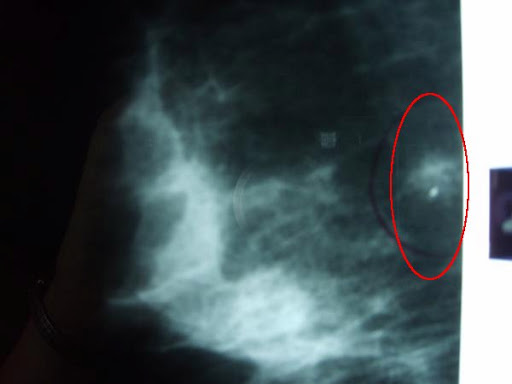
Another fact to consider is that by the time a woman has a palpable lump which proves to be breast cancer, the disease is already active and growing, which usually means a higher stage of the disease. Why wait until you have a lump in your breast if you can have a screening mammogram each year after age 40 to prevent that lump from growing and spreading?

The new guidelines do make allowances for women with a higher risk of breast cancer. Those risk factors include:

*Family history of breast cancer ( mostly in first degree relatives: mother, maternal grandmother, maternal aunt, sister, daughter)

*Personal history of benign biopsies.

*Does the woman carry the BRCA 1 or BRCA2 gene?

*Woman’s age (over 50)

*Woman’s age at first menstrual cycle- under age 13=higher risk factor for breast cancer

*Childbirth- not having children increases a woman’s risk of breast cancer

*Age when first childbirth occurred- women who postpone childbirth until after age 30 are at higher risk for breast cancer.

*Breast feeding- not breast feeding increases a woman’s risk of breast cancer

*Palpable lumps and or masses in breasts

* Use of birth control pills

If you’d like to take your own breast cancer assessment test, you can find it online at http://www.cancer.gov/bcrisktool/

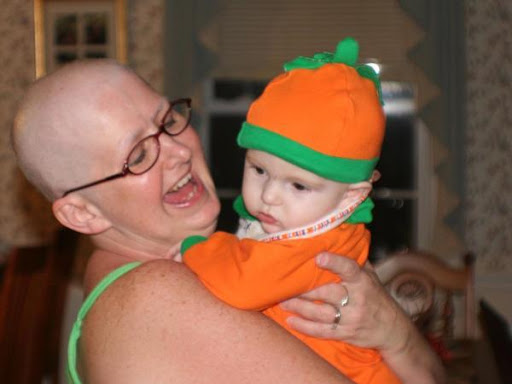
My Journey with Breast Cancer My Journey with Breast Cancer I was 47 when I was diagnosed with breast cancer after a routine screening mammogram. I had no symptoms, I had no family history, and I only met one of the risk factors for breast cancer. I took birth control pills.


My cancer was aggressive as cancers tend to be in women under 50, and it was close to the chest wall. It had a high proliferation rate, which meant it was increasing and spreading at a rapid pace.

My Journey with Breast Cancer

Biopsy specimen

The lesion was already between the sizes it should be for stage one diagnosis, but because of screening mammography, the doctors caught it before it reached stage two. Had I waited until I felt a palpable lump or until I was 50, I most likely would not be here now.


As a mammographer, far too often, I see women who postponed their screening mammogram until they felt a lump or turned 50, only to learn they have a more advanced stage of breast cancer that could have been caught sooner had they begun screening at age 40.

The U.S. Preventive Services Task Force did use researchers and doctors to come up with these new guidelines, but they were family doctors, scientific researchers and OB/Gyn’s. They were not radiologists, radiation oncologists, or medical oncologists. They were not doctors who deal with breast cancer on a routine basis.

Another fact: Neither the Breast Cancer Organization, the FDA, nor the American College of Radiology agree with The U.S. Preventive Services Task Force’s findings.

The FDA, also a government agency, is the governing body that oversees MQSA (Mammography Quality Standards Act.) They ensure compliance with radiation safety, quality control, the credentials, registration, and continuing education of all technologists who perform mammograms, the radiologists who interpret the mammograms, and the physicists who ensure the accuracy of all mammography equipment, and the FDA still recommends annual screenings begin at age forty.

The FDA has other guidelines that all certified sites must follow. Facilties that perform mammograms must send out letters to the patient directly as well as full reports to the ordering physician. These letters must inform the patient if their mammogram results are normal or if they need to follow up with their physician. If the letter advises them to follow up, it means additional imaging is recommended in the form of a diagnostic mammogram, ultrasound, short term follow up, and/or biopsy. The FDA also requires the letters to give information on a patient’s breast density. The site where I perform mammograms recommends the site http://www.areyoudense.org/

If this is not enough information to help you decide whether to screen at 40 vs. 50, here are some other facts to consider.

Currently, the government requires Medicare Part B and Medicaid to cover screening mammograms without a copay or deductible on women over 40 if the doctor or other qualified health care provider accepts assignment. Raising the screening age to 50 will save the government money. Insurance companies normally fall in line with medicare/medicaid guidelines, which means most insurance companies would no longer pay for screening mammograms for patients with medium to no risk risk factors for women under 40 if medicare raises the age. Patients will then either not have the study done, or they will pay out of pocket as they were forced to do back in the 80’s.

Insurance companies and the government will save money and the cure rate for breast cancer will rise to the level it was back in the late 80’s and early 90’s before insurance companies began covering screening mammograms. Or, doctors will start ordering more diagnostic mammograms so their patients will get the health studies they need by claiming breast pain or lumps, both of which are payable reasons for a diagnostic mammogram and neither of which can be disproved since breast tissue is naturally lumpy. Since diagnostic mammograms take 2 to 3 times longer to perform than screening mammograms because of additional images and the need to show the radiologist the films, this will result in scheduling delays and longer wait times because of a surge in the need for diagnostic imaging. It will also result in an increase in cost because diagnostic mammograms cost more than screening mammograms and in an increase in radiation exposure to the patient because more images are acquired during a diagnostic vs. a screening study.

As far as the Task “Force claiming screening women younger than age 50 leads to an increase in the number of normal or benign biopsies, the FDA has had guidelines in place for years to deal with this issue. All certified facilities who perform mammograms must also perform annual audit trails. These facilities track the number of biopsies ordered and performed by each and every radiologist who interprets mammograms and the number of those biopsies that are positive. The goal is for the positive rate to be at 25% or higher, which lets the radiologist and the FDA know if too many biopsies are being ordered. The good news for women is that of all biopsies performed, only about 1/4 are positive for breast cancer. That doesn’t mean the biopsy was unnecessary. As stated before, there are other abnormal findings in the breast that are not cancer, but still need addressing, such as atypical hyperplasia, fibroadenomas, and some infectious processes.

Get Your Pink On!Now as always, the best defense against breast cancer is early detection. And according to the ACR Appropriateness Criteria:

Mammography is the only method of screening for breast cancer shown to decrease mortality.

Annual screening mammography is recommended starting at age 40 for general population;  age 25-30 for BRCA1 and BRCA 2 carriers and untested relatives of BRCA carriers; and 10 years earlier than the age at which a patient’s mother or sister was diagnosed with breast cancer, or 25-30, whichever age is greater.
**My daughters will need to begin screening at age 37 because I was diagnosed at age 47***
Annual screening is also recommended 8 years after radiation therapy but not
before age 25 for women who received mantle radiation treatments between the ages of 10- 30 and at any age for women with biopsy-proven lobular
neoplasia, atypical ductal hyperplasia (ADH), ductal
carcinoma in situ (DCIS), or invasive breast cancer.
Some final facts about breast cancer:

My Journey with Breast Cancer1 in 8 women (some studies say 1-7 women thanks to early detection) will develop breast cancer in her lifetime.

70% of all new breast cancers are in women with no family history. (someone has to be the first to screw up the family gene pool.)
2% of all breast cancers are in men.
There is a reason for the lower mortality rate of breast cancer. Improved All About the Pinkmammograms in the form of digital and more recently, 3D mammograms, and screening programs put into place that not only recommend screening at age 40, but programs like Komen for the Cure and local health departments that assist low income and uninsured women get the screening studies they need. If the government succeeds in raising the screening age to 50 nationwide and all insurance companies, medicaid, and medicare comply, the government and insurance companies will benefit by saving money and/or increasing profits, but there will be a rise in the mortality rate of breast cancer.
I don’t know about you, but I wouldn’t want that death to be someone I know and love because they couldn’t get screened until they were 50.


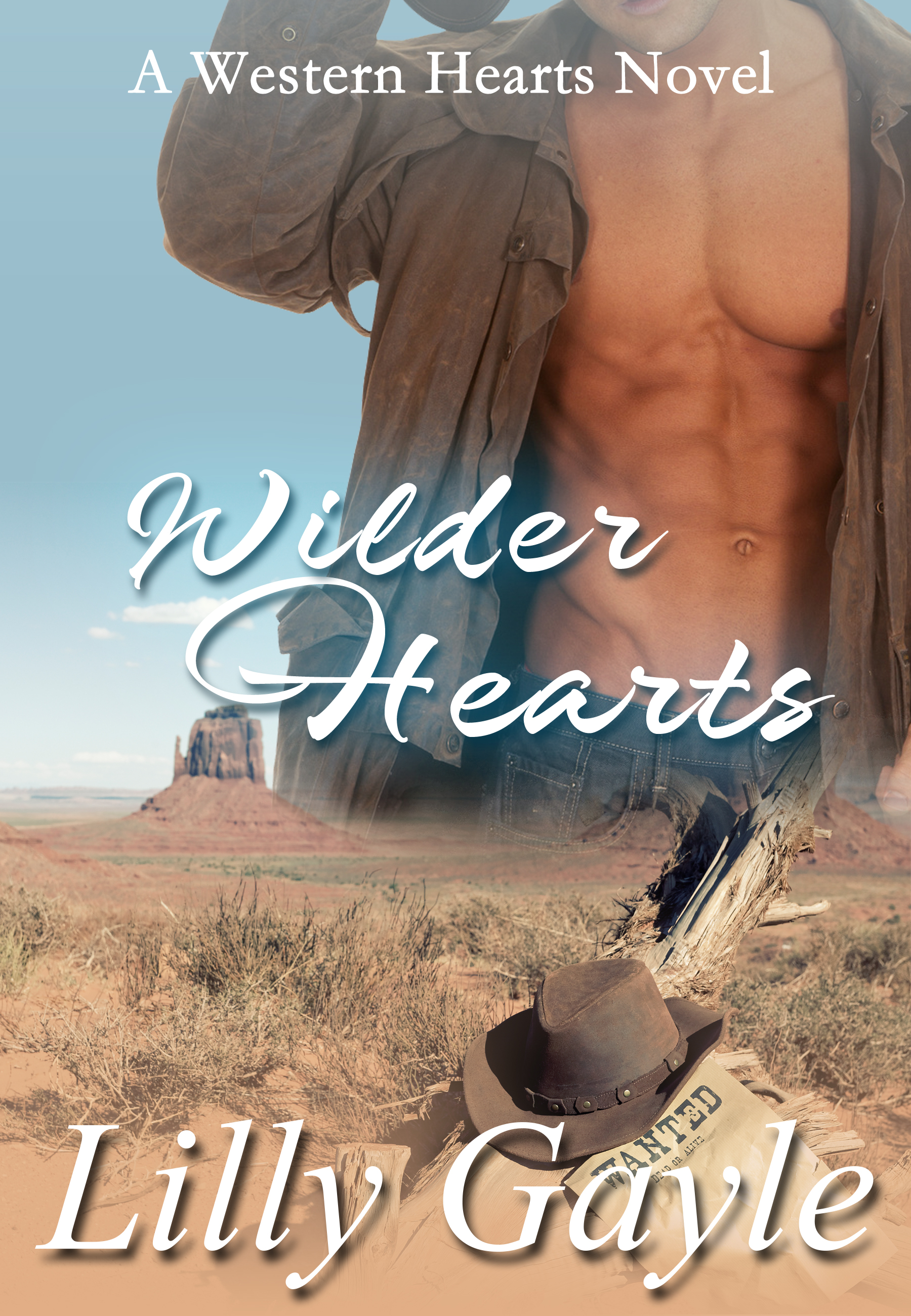
Award Winning Author…Lilly Gayle!

02 Monday Nov 2015

Posted by lillygayle in Uncategorized

≈ 4 Comments

Tags

Award winning author, IDA Contest, OKRWA

So happy to announce that my historical romance won first place in the historical novel division in the OkRWA International Digital Awards Contest!

The IDA is a contest sponsored by Oklahoma Romance Writers of America, but is open to all works of fiction in digital format, regardless of their romantic content.

Historical Novel

First Place ~  Slightly Noble by Lilly Gayle

Second Place ~ To Ride a White Horse by Pamela Ford

Third Place ~ Then I Met You by Deborah C. Wilding

Fourth Place ~ Wagers Gone Awry by Collette Cameron

Fifth Place ~ Highland Escape by Cathy MacRae and D.D. MacRae

https://oklahomarwa.wordpress.com/contests/international-digital-awards/ida-breaking-news/?preview=true&preview_id=799&preview_nonce=424dfeec6e


American privateer, Captain Jack isn’t really an American, but heir to a viscountcy. When his father dies, he leaves everything not entailed with the estate to his worthless cousin. Jack’s only hope of inheriting his mother’s ancestral home and honoring her dying wish is to marry and produce an heir before his thirty-fifth birthday—in five months. And he doesn’t have a single prospect. Pregnant and unwed, Abigail Halsey is sent by her father to an Anglican convent until he can find a family to adopt his grandchild or a husband for his daughter. Abby has other plans, but they go awry when she goes into labor early and her rescuer, a pirate captain turned lord, insists on marrying her. Is Jack too much like his jealous, unforgiving father? Can Abby overcome her fear of men and have a real marriage? Or will she never be anything more than the unwanted wife of a Slightly Noble Viscount?

Thank you to the judges and the Oklahoma Romance Writers of America!

Romance Novels Worth Reading

09 Friday Oct 2015

Posted by lillygayle in Uncategorized

≈ 4 Comments

Tags

Isla Grey, romance novel, The Wild Rose Press

Looking for a good romance novel? The Wild Rose Press publishes romances by some of the best and newest names in the industry.

So, why not check out Asylum Harbor by Wild Rose Press author, Isla Grey?

AsylumHarborTagline
“Still Waters Run Deep”

Blurb
Trouble is the last thing Devon Brown needs when she leaves the painful memories of her past behind and heads to Shell Island. As the Salty Dog’s new bartender, she finds herself drawn to Kerr, the Shell Island harbormaster. But finding her happily-ever-after is difficult when dealing with an obnoxious bootlegger who supplies the bar with illegal liquor and a jealous coworker.
A standoffish loner with damaged emotions, Kerr avoids relationships like the plague. Things change when Devon catches his eye. As a simple flirtation grows serious, the coworker and bootlegger quickly become obstacles to any future Kerr and Devon may have together. As the situation worsens, Devon realizes that even the still waters of Asylum Harbor are no refuge during a storm.
Excerpt
“You already got dibs on this one Kerr?”
Porter shot an evil glare at the opposite end of the bar and looked back toward her. “I’ll see you tonight.” He flicked his tongue. “After work.” He raised his glass in a mock toast and chugged it in one gulp.
The lights dimmed for Victoria’s dance of the night. Devon watched Kerr, who was usually headed for the exit by now, and breathed a sigh of relief when he remained glued to his seat with his back to the stage. He wasn’t staying for Victoria’s peep show. There must have been something about this Porter character that got under his skin in a bad way.
Devon was eager for the quick break. She hustled to the back as the chords to “Simply Irresistible” began to pelt over the speakers and ran some cold water over her forearm. A red welt was beginning to show where Porter had held onto it. She hoped he would be gone by the time she got back.
Making it out before mid-song, Devon rounded the bar when someone snagged her wrist and thrust her hard against the bar, knocking the wind out of her. She could smell Porter’s alcohol-laced breath as his weight pinned her under him. One of his grubby hands shot under her shirt while the other wrestled with the button on her pants. “Let’s give them a real show.”
She struggled to reach the Equalizer, but it remained hidden, out of her grasp. Devon hoisted her knee toward his crotch, but Porter lost his balance and fell backward before she could make contact.
Kerr towered over him. “Get your hands off her.”

Publisher’s Info.
Publisher: The Wild Rose Press
Title: Asylum Harbor
Series Name: The Salty Dog Series, Book One
SubGenre(s): Contemporary, Suspense
Rating: Spicy (PG-13)
Page Count: 198
Word Count: 45,430

islagreyAUTHOR BIO
Isla Grey is from Central Virginia and still lives in the same small town she grew up in. She developed a love of writing at an early age and over the years has tried her hand at penning poetry (some good, some not so good), screenwriting, newspaper articles and historical stories. She’s “old school” when it comes to writing and is a hoarder of more pens, post-it notes and writing journals than she’ll ever need. Isla likes to write different types of stories from romance to mystery and anything in between and loves a “happy for now but there could be some bad things coming” feel. When Isla’s not writing, she spends her time being called “Mom, Mama, Mommy” (well, you get the picture) by her daughter who is forever active, even in her sleep. She considers herself an unofficial “cat whisperer” and is a pet human to a plethora of cats that have taken up residence at her home over the years. Isla also enjoys reading a good biography or ghost story, traveling even though “there’s no place like home”, good music played loud and walking.
Isla loves movies and is the movie mistakes editor at Bellaonline.com where she talks about…well…movies. Her novella, “A Voice in the Dark”, is available now and her book, “Asylum Harbor”, will be released September 16th, 2015 through Wild Rose Press.
You can connect with Isla at:
Website: http://www.islagrey.com/
Blog: http://www.islagrey.com/islas-inklings
Facebook: https://www.facebook.com/AuthorIslaGrey
Twitter: https://twitter.com/IslaGrey1
Goodreads: https://www.goodreads.com/islagrey
Amazon: http://www.amazon.com/-/e/B00MMTEYEK

Asylum Harbor Book Trailer:
https://www.youtube.com/watch?v=sDfqmyddcQ4
Asylum Harbor Buy Links:
The Wild Rose Press: http://www.wildrosepublishing.com/maincatalog_v151/index.php?main_page=product_info&cPath=195&products_id=6370

Amazon:
http://www.amazon.com/Asylum-Harbor-Salty-Dog-Book-ebook/dp/B013XZTWCK

Amazon UK:
http://www.amazon.co.uk/Asylum-Harbor-Salty-Dog-Book-ebook/dp/B013XZTWCK/ref=sr_1_2?s=digital-text&ie=UTF8&qid=1439668954&sr=1-2

All Romance Ebooks:
https://www.allromanceebooks.com/product-asylumharbor-1872864-153.html

Barnes & Noble:
http://www.barnesandnoble.com/w/books/1122527329?ean=2940151148269

Bookstrand:
http://www.bookstrand.com/asylum-harbor

Kobo:
https://store.kobobooks.com/en-US/ebook/asylum-harbor

My Review of Dr. Steven Bentley’s “A License to Heal:Random Memories of an ER Doctor”

29 Tuesday Sep 2015

Posted by lillygayle in Uncategorized

≈ Leave a comment

A License to Heal: Random Memories of an Er DoctorA License to Heal: Random Memories of an Er Doctor by Steven Bentley
My rating: 3 of 5 stars

If you’ve ever worked in a hospital, ER, or with EMS, you’ll be nodding along as you read Dr. Bentley’s accounts of becoming a doctor and then working as an ED/ER physician. And if you’ve never worked in the medical field but have been frustrated by ER wait times, this book will give you a keen insight as to why ER’s have become so overcrowded and why those wait times are so long. The book reads like most memoirs, written in first person, but Dr. Bentley adds a personal touch to the stories that draw the reader in, making them feel as if Dr. Bentley is sharing his “war” stories over coffee. The one downside was with the editing. I hope he did not pay for an editing service because at one point in the book, the word “cliche” was actually spelled “clic***”, and the editor didn’t even catch it! Despite that, I enjoyed the stories within the book a great deal. Some made me laugh, some made me cry, and some made me angry. Having worked with this doctor before, I knew he had a kind heart, but the book really emphasizes his compassion. Which brings me to one other editing issue. Dr. Bentley used the word x-ray technician (a severely out-dated term) instead of x-ray technologist, several times, but since he admitted to being a dinosaur, it’s an understandable mistake. I still use the term ER instead of ED because I too am fast becoming a dinosaur. Dr. Bentley also delved into issues with the VA and the affordable health care act, letting his views be known without getting political, and quite frankly, I think he hit the nail on the head. You can’t run health care as you would a fortune 500 company and expect it to remain affordable. A really good read and had it not been for the editing issues, I would have given this book 4 stars.

View all my reviews

My Goodreads Review of A Case for Calmity

24 Thursday Sep 2015

Posted by lillygayle in Uncategorized

≈ Leave a comment

A Case for CalamityA Case for Calamity by Mackenzie Crowne
My rating: 4 of 5 stars

A short fun read about a smart but clumsy New Yorker who is posing as her best friend while in Paris when she meets the man of her dreams. There’s romance, humor, friendship, and some family drama rolled into a short story that reads like a longer book. Very enjoyable.

View all my reviews

Ah, The Victorian Era

04 Friday Sep 2015

Posted by lillygayle in Uncategorized

≈ 2 Comments

Most historical romances are set in Regency England or they are Westerns, Civil War novels, or Medieval romances. I love all of these genres but I also love the Victorian Era.

clonedlongdress ancestors The Victorian Era encompasses the time of Queen Victoria’s reign from June 1837 until her death in January 1901. It was a time of peace, prosperity, and refined sensibilities. During these years, Americans living in larger cities, New England, and the Deep South, followed the fashion, fads, and lifestyles popular in British cultural and so this time frame is also called the Victorian Era in America.

It was a time of time of romanticism and mysticism with regard to religion, social 027 (3)values, and the arts.It was a time when people believed in spirit mediums and communicating with the dead through séances.

It was also a time of moral values and sexual restraint—a time when women began to question and later protest their roles as nothing more than mothers, wives, and housekeepers. It was an era of reform and enlightenment-a time when women protested for the right to vote.

099 (3)It was an era of economic, colonial, and industrial expansion–a time when liberal views shifted in the direction of political and industrial reform.


S5004133Entertainment was quite diverse during the Victorian era. Besides the theater, balls and soirees, freak show exhibits became popular during this time.


These “shows” boasted a variety of “freaks” from famous conjoined twins Eng an Chang to Joseph Merrick, The Elephant Man.

Classic literature was popular but so were Dime and Gothic novels.
Dime novels typically idealized law enforcement, outlaws, or both. Gothic novels were a genre of literature that combined horror and romance.

Since women were known to write and publish Gothic novels using male pseudonyms, it has become a popular theme in many romance novels set in both the Regency and Victorian Eras.


015 (3)Tuberculosis –then called consumption—was the main cause of death in the latter 19th century. Because of this dreaded disease, sanatoriums were created where sufferers were often sent to recuperate or die.

Most died.

Before Luis Pasteur suggested germs as the cause of disease and microscopes proved him right, most people believed bad odors–called miasmas–caused sickness. Both London and New York smelled horribly in the early years of the Victorian Era as sewage was dumped directly into the streets. Luckily, the flushing toilet and advent of modern sewers came about during the Victorian Era. But contrary to popular opinion, Thomas Crapper did not invent the flush toilet. However, he did increase the popularity of the toilet and developed some important related inventions, such as the ballcock. And, he is the reason the toilet is often called the crapper and why crap, is well, crap.

The Victorian era was a time of discovery, when germs and cleanliness were recognized as contributing factors in survival rates after surgery. Other than alcohol and opiates such as laudanum, painkillers had not been invented. Chloroform was the only known anesthesia, which didn’t come into effect until the middle of the 19th century. It often caused paralysis or death, so many surgeries were carried out with no anesthesia at all. Operations were painful procedures that more closely resembled torture.

The Victorian Era was also a time of serial killers and advancements in detective work. In 1882, fingerprinting for identification was first used in New Mexico. In 1883, author Samuel Clemmons, aka Mark Twain, used fingerprinting in his book, Life on the Mississippi, to identify the killer. In a later book, Puddin’ Head Wilson, there’s an entire courtroom scene using fingerprint identification.


In London, Jack the Ripper gained notoriety during the Victorian Era. In America, Lizzy Borden grabbed headlines. So did a lesser known sadistic killer, the Chicago Butcher—Adolph Luetert.
In 1897, Luetgert, Chicago’s main sausage manufacturer, was known for his dalliances with other women. The rich entrepreneur had dozens of mistress, but when his wife protested his infidelities, Luetgert stabbed her, boiled her, and put her remains through the sausage grinder. Coincidentally, the electric chair was also introduced during this time in history.

As photography became more common place, so did a macabre interest in photographing the dead. For a vast number of “Victorians” death photos were the only time a loved one was photographed.081 (3)
dead guyOddly enough, my mother has a death photo of an ancestor, Herbert Newton, in her collection of family photographs.

Creepy. Huh?

gm&fSwimming became popular during this time period and the bathing suit became a noted fashion. Although, Victorian swimwear was quite modest and those daring enough to swim in the ocean did so by hanging on to a rope.

Throughout most of the civilized world, this was a time of industrialism and creativity—a time of inventions such as: the automobile, telephone, radio, toilet, camera, stamp, train, vacuum cleaner, and sewing machine. Steam was used to power factory machinery, ships and trains. Just writing this post reminds me of all the great story ideas I have for romance novels set in the Victorian Era.

So, what’s your favorite historical era?

← Older posts
Newer posts →

Follow me on Facebook

Follow me on Facebook

Instagram

No Instagram images were found.

Follow me on Twitter

My Tweets

Home Town Reads

Grab My Button

My Button

<a href="https://lillygayle.com/blog/" title="Blog Button"> <img src="https://lillygayle.files.wordpress.com/2013/09/25a0987b-884f-49cd-b095-21ae24e889f81.jpg" width="200" height="200" alt="My Button" style="border:none;" /></a>
  • RSS - Posts
  • RSS - Comments

Blogs I Follow

  • Rosie Amber
  • davidjrogersftw
  • Wild Heart Reviews
  • LITERARY TITAN
  • Captain’s Log
  • Cari Barnhill
  • Romance Novels for the Beach
  • thebookbreeze.wordpress.com/
  • Lilly Gayle Romance
  • Jill James, romance writer
  • Emma Kaye
  • Charlotte Copper...
  • Barbara Edwards Comments
  • andrisbear.wordpress.com/

Blog at WordPress.com.

Rosie Amber

Book reviewer and garden enthusiast. Updates from my Hampshire garden. Usually talking about books and plants. People do not forget books or flowers that touch them or excite them—they recommend them.

davidjrogersftw

Starting life Fresh: Living to Win

Wild Heart Reviews

Love is the heartbeat of the soul

LITERARY TITAN

Connecting Authors and Readers

Captain’s Log

Life On A Different Plane

Cari Barnhill

Where words are magic

Romance Novels for the Beach

Find out which sexy books to bring with you, or leave behind, on your next beach vacation.

thebookbreeze.wordpress.com/

Where Writers and Readers Meet

Lilly Gayle Romance

Romance Author and Books

Jill James, romance writer

Contemporary - Paranormal - Zompoc - Romance

Emma Kaye

Romance Author

Charlotte Copper...

Writer, reader and crafter. There are never enough hours in the day

Barbara Edwards Comments

Riveting Romance With An Edge

andrisbear.wordpress.com/

  • Subscribe Subscribed
    • Lilly Gayle Romance
    • Join 83 other subscribers
    • Already have a WordPress.com account? Log in now.
    • Lilly Gayle Romance
    • Subscribe Subscribed
    • Sign up
    • Log in
    • Report this content
    • View site in Reader
    • Manage subscriptions
    • Collapse this bar
 

Loading Comments...